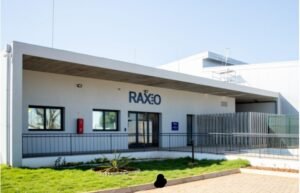
The decision by digital entrepreneur Cornel Osigwe and South Africa-based Gembok Group, owned by Charles Awuzie, to establish the Gembok Innovation Hub in Nnewi goes beyond another private technology investment. It represents one of the clearest attempts to build a regional digital economy outside Lagos and Abuja. If the project succeeds, it could alter how technology talent, business growth, and foreign investment develop across South-East Nigeria.
The partnership plans to inject between $2 million and $5 million into the Nnewi economy over five years through infrastructure, training, cybersecurity services, startup incubation, and digital enterprise support. The project will transform the Nnewi Digital Village facility in Nnewichi into a multi-purpose technology centre with cybersecurity laboratories, AI training facilities, startup workspaces, accommodation, and digital forensics services.
What makes the development important is not only the investment size. The real significance lies in the type of economy the project intends to build.
Nnewi already has a strong industrial identity. The city built its reputation through manufacturing, automotive parts, trade, and entrepreneurship. However, many businesses in the South-East still operate with limited digital capacity. Most small and medium-sized enterprises rely on manual systems, weak cybersecurity structures, poor digital branding, and limited access to advanced technology skills. The Osigwe–Gembok partnership attempts to connect the region’s traditional commercial strength with modern digital infrastructure.
According to the project announcement, the innovation hub will provide “cybersecurity training and certification,” “AI and digital skills development,” “co-working and startup hub” services, and “technical laboratories and infrastructure.” Those components target one of Nigeria’s biggest economic weaknesses: the shortage of advanced technology talent.
Deloitte Nigeria recently warned that Nigeria faces a severe cybersecurity workforce shortage as demand for skilled professionals continues to rise globally. The report stated that about 4.8 million cybersecurity positions remain unfilled worldwide and noted that Nigeria continues to lose talent through migration.
That shortage creates two major problems for Nigerian businesses. First, companies remain vulnerable to cyberattacks, data breaches, and digital fraud. Second, businesses struggle to compete internationally because global firms increasingly require secure digital operations before entering partnerships.
The Nnewi innovation hub attempts to solve both problems at the same time.
By training young people in ethical hacking, digital forensics, machine learning, and AI systems, the centre could create a local pipeline of technology professionals who can work for Nigerian companies, foreign firms, banks, fintech startups, manufacturing companies, and government agencies. That matters because cybersecurity and AI are now core parts of global business operations rather than optional services.
The project also arrives at a time when Nigeria’s digital economy is becoming one of the country’s strongest growth sectors. Voice of Nigeria reported that Nigeria’s digital economy contribution to GDP could reach 21 percent by 2027, according to Minister of Communications, Innovation and Digital Economy, Bosun Tijani.
Additional industry reports show that the digital economy already contributes trillions of naira annually to Nigeria’s GDP through telecommunications, fintech, software services, and digital transactions.
TechNext reported that Nigeria’s digital economy contributed about N6.7 trillion to GDP in the third quarter of 2025 alone.
That wider economic context explains why the Nnewi project matters beyond Anambra State.
For decades, Nigeria’s technology economy remained concentrated in Lagos. Venture capital firms, startups, accelerators, and global technology companies built their operations around a single ecosystem. While Lagos remains dominant, rising infrastructure costs, office expenses, traffic congestion, and housing pressures are pushing investors to search for secondary innovation centres.
Nnewi offers a different economic model. The city already has an entrepreneurial culture, industrial clusters, transport networks, and commercial trading systems. Adding digital infrastructure to that environment could create a hybrid economy where manufacturing and technology work together.
That combination could produce direct benefits for SMEs across the South-East.
Many small businesses in Onitsha, Aba, Nnewi, Enugu, Abakaliki, and Owerri face growing cybersecurity threats without access to professional protection services. Fraudulent transactions, phishing attacks, fake payment alerts, hacked social media accounts, and database theft continue to affect thousands of businesses annually. Most SMEs cannot afford Lagos-based cybersecurity consulting firms.
The Gembok Innovation Hub could reduce that gap by providing affordable local cybersecurity support, compliance audits, penetration testing, and incident response services. Those services could help businesses protect payment systems, customer records, inventory databases, and online platforms.
The startup and co-working component could also reduce entry barriers for young entrepreneurs. Many technology founders outside Lagos struggle with office costs, internet access, electricity challenges, mentorship shortages, and weak investor networks. A centralized innovation hub creates a physical ecosystem where developers, designers, content creators, cybersecurity analysts, and AI engineers can work together.
The children’s coding and robotics programme may produce the project’s longest-lasting economic value. Nigeria has a very young population, but access to quality STEM education remains uneven outside major urban centres. Early exposure to coding, robotics, and AI systems increases the chances of building future technology entrepreneurs and engineers within the region instead of depending entirely on imported talent.
The investment may also reduce part of the talent migration problem affecting the South-East. Many graduates leave the region for Lagos, Abuja, Europe, United States of America, Australia, Austria, Canada, or the United Kingdom because advanced technology opportunities remain limited locally. A functioning innovation ecosystem creates reasons for skilled workers to remain within the regional economy.
The project’s foreign direct investment structure is equally important. Nigeria continues to struggle with weak foreign capital inflows because investors remain cautious about infrastructure risks, currency volatility, and economic uncertainty. Reuters recently reported that Nigeria continues to pursue broad economic reforms while attempting to strengthen long-term growth and attract investment.
Against that backdrop, a South African-backed technology investment in Nnewi sends a commercial message that regional cities can attract international partnerships if the right infrastructure exists.
Still, the success of the project will depend on execution rather than ambition. Technology hubs alone do not create economic transformation. Stable electricity, strong internet connectivity, credible training standards, industry partnerships, and access to funding will determine whether the centre becomes a lasting institution or another underused facility.
Yet the broader direction remains important. The Osigwe–Gembok partnership introduces a practical development model where technology training, business support, foreign investment, cybersecurity services, and entrepreneurship operate within one ecosystem.
For the South-East, that could mean the beginning of a more diversified economy. For Nigerian SMEs, it could mean better access to digital protection and modern business tools. For young people, it could create new paths into global technology markets without leaving their region behind.
Most importantly, it places Nnewi inside the national conversation about Nigeria’s digital future.