Africa’s electric mobility industry is entering a new phase of commercial growth. The latest USD 8 million debt funding secured by Metro Africa Xpress (MAX) from Triple Jump shows that global investors now see African electric vehicle businesses as scalable financial assets rather than experimental climate projects. The transaction, arranged by Verdant IMAP, also reveals how technology, finance, and infrastructure are combining to create a new transport economy across the continent.
The deal comes at a time when African cities face severe transport pressure, rising fuel costs, foreign exchange shortages, and worsening urban pollution. In countries such as Nigeria, commercial motorcycle and tricycle operators spend a large share of their daily income on petrol and maintenance. MAX is trying to solve this problem by replacing fuel-powered vehicles with electric alternatives backed by battery-swapping systems and digital financing tools.
According to the company, the funding will support the expansion of its electric vehicle fleet, battery swap infrastructure, and Pay-As-You-Go financing platform. The company currently operates in Nigeria, Ghana, and Cameroon, with Nigeria remaining its largest market.
This development matters because mobility is one of Africa’s largest informal economic sectors. Millions of riders, drivers, dispatch workers, and logistics operators depend on daily transport income. Traditional banks often avoid financing these workers because many lack formal credit histories. MAX uses embedded finance and technology to solve that problem.
The company’s Pay-As-You-Go system allows drivers to access vehicles without large upfront payments. Drivers gradually pay toward ownership through digital instalments linked to their daily earnings. This model lowers entry barriers into the transport economy and expands financial inclusion for low-income workers.
MAX described its system as one designed “to lower barriers to asset ownership for commercial drivers.” That sentence captures the wider economic value of the company’s model. In many African markets, asset ownership remains one of the biggest obstacles to wealth creation. By financing productive assets such as electric motorcycles and tricycles, MAX creates income opportunities while reducing operating costs.
The technology layer behind the business is equally important. MAX is not simply selling electric motorcycles. It is building a complete mobility ecosystem that includes purpose-built electric vehicles, battery-swapping stations, IoT-enabled fleet management systems, and digital finance infrastructure.
This integrated structure addresses one of Africa’s biggest electric mobility challenges: unreliable electricity infrastructure. Charging delays can hurt driver productivity in cities where commercial transport operators depend on daily turnover. MAX’s battery-swapping model removes long charging hours by allowing drivers to exchange depleted batteries for fully charged ones within minutes.
That approach could become one of the most commercially viable clean-energy solutions in African transport markets. In September 2025, MAX launched West Africa’s first solar-powered battery-swapping station. Verdant Capital said the system guarantees uninterrupted battery swaps while reducing dependence on weak national power grids and expensive fuel generators.
The economics behind electric mobility are also becoming stronger. Battery prices continue to decline globally, while petrol costs remain volatile across African economies. Analysts increasingly believe electric motorcycles and tricycles can become cheaper to operate than internal combustion vehicles over the long term.
MAX already claims profitability in Nigeria, a major milestone in a sector where many African startups still struggle with sustainable revenue models. According to BusinessDay, the company has deployed more than USD 56 million in fleet financing and recovered USD 44 million through repayments.
That repayment performance helps explain why international lenders are entering the business. Triple Jump’s participation is especially important because institutional debt investors are typically cautious about African startup lending. Their involvement suggests growing confidence in asset-backed financing structures tied to electric mobility.
The structure of the transaction also shows how African fintech is evolving beyond mobile payments into productive infrastructure finance. For years, fintech growth on the continent focused mainly on transfers, wallets, and digital banking. MAX introduces a different model where technology supports physical infrastructure, transport systems, and industrial assets.
Its IoT-enabled fleet management platform allows the company to monitor vehicle usage, battery performance, repayments, maintenance schedules, and operational efficiency in real time. That data improves risk assessment and strengthens lender confidence. It also helps drivers reduce downtime and operating losses.
The broader market implications could be substantial. Africa’s urban population continues to rise rapidly. The United Nations projects that the continent’s urban population will nearly double by 2050. Urban transport demand will rise alongside that growth. Electric mobility companies that can combine affordable financing with scalable infrastructure may become central players in Africa’s future economy.
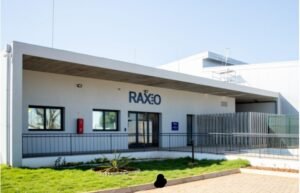
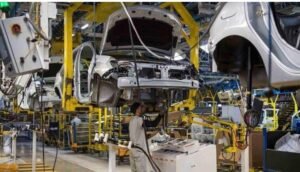
The funding also strengthens Africa’s local manufacturing ambitions. MAX operates an electric vehicle assembly facility in Ibadan with capacity to produce up to 3,600 vehicles monthly. Local assembly reduces import dependence, lowers logistics costs, and supports industrial job creation.
The environmental impact is another major factor. Verdant Capital previously stated that MAX had already reduced more than 55,000 tonnes of carbon emissions across its operations. For governments facing mounting climate pressure and fuel subsidy costs, electric mobility could eventually reduce public spending burdens while improving air quality in large cities.
The financing deal also strengthens the role of African investment banks in connecting global capital with local technology companies. Verdant IMAP acted as sole financial adviser and arranger on the transaction. That role involved structuring the deal, engaging investors, and managing execution.
African businesses often struggle to attract international capital because investors perceive high risks, weak governance standards, and limited market transparency. Firms such as Verdant IMAP help bridge that gap by creating institutional-grade financing structures that international lenders can trust.
The importance of this role extends beyond a single transaction. Africa’s clean energy transition requires billions of dollars in long-term financing. Development finance institutions alone cannot fund that transformation. Private capital markets must participate at scale.
This deal suggests that African electric mobility is becoming commercially bankable. It also shows that technology-backed financing models can unlock opportunities for millions of underserved workers while supporting cleaner urban transport systems.
MAX’s growth ambitions are already significant. The company aims to support 250,000 drivers by 2027 and generate more than USD 150 million in annual recurring revenue. If successful, the business could become one of Africa’s strongest examples of how climate technology, embedded finance, and digital infrastructure can combine to create profitable and inclusive economic growth.
For African markets, this matters because the future of transport will not depend only on electric vehicles themselves. It will depend on financing systems, battery infrastructure, local assembly, digital platforms, and investor confidence. MAX and Verdant IMAP are trying to build all those layers simultaneously.
About Verdant IMAP
Verdant IMAP is a leading pan-African investment bank specialising in mergers and acquisitions and private capital markets. The firm combines international investment banking expertise with deep local market knowledge to help African businesses access global capital and strategic partnerships. Verdant IMAP has advised transactions across financial services, fintech, infrastructure, mining, clean energy, and industrial sectors. The company is also the regional partner of IMAP, a global mergers and acquisitions network established in 1973 with more than 600 professionals across 51 countries. IMAP consistently ranks among the world’s leading advisers for mid-market transactions and completes around 300 deals annually.