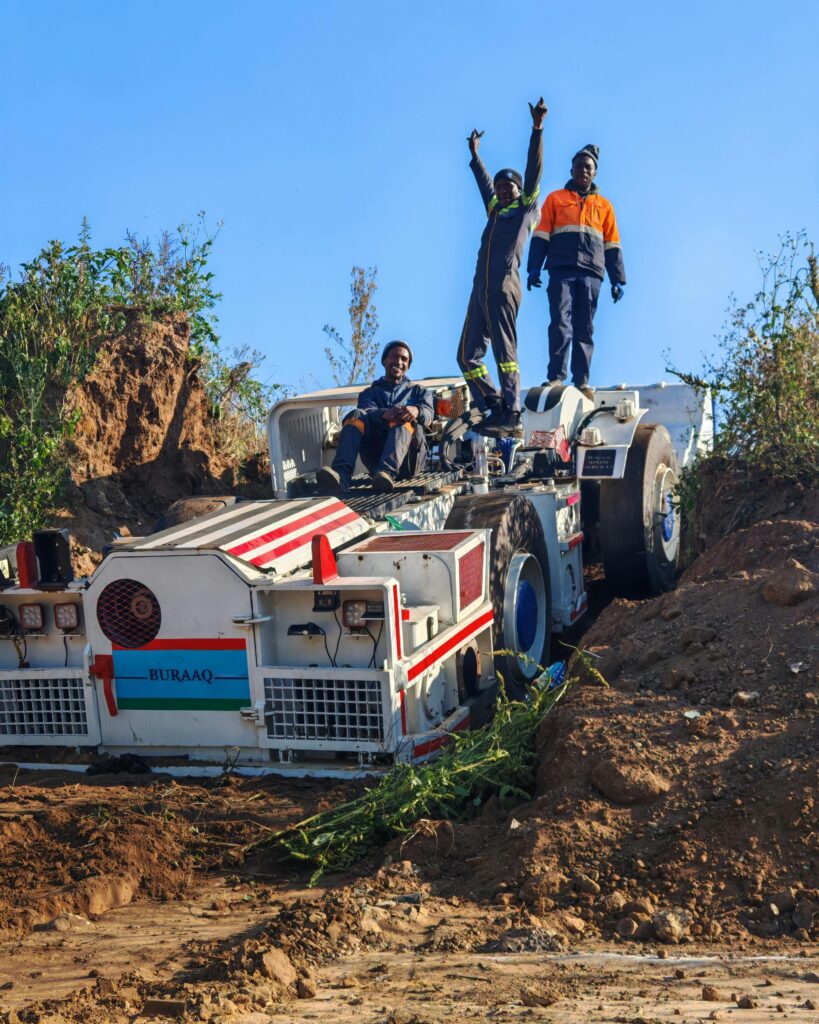
Africa’s mining sector stands at a decisive inflection point. The continent holds nearly 30% of the world’s mineral reserves, yet extraction efficiency often lags behind global benchmarks due to splintered operations, legacy blasting methods, and limited data integration. The rise of digital blasting technologies is changing this equation. By connecting design, execution, and post-blast analytics into a single intelligence loop, mining operators are beginning to unlock measurable gains in productivity, safety, and cost control.
This report examines how digital mining solutions are transforming blast design and execution across Africa, with a focus on operational intelligence, regional adoption trends, and investment implications.
The Transition from Conventional Blasting to Connected Intelligence
Traditional drill-and-blast operations rely heavily on manual design, field judgment, and isolated datasets. This approach creates variability in segmentation, dilution, and downstream processing efficiency. The industry now recognises that blast performance is not a single event but a data-driven system.
Digital platforms integrate geological modelling, drill data, explosive loading, and timing sequences into unified workflows. According to Orica Digital Solutions, “integrated digital solutions connect the value chain from mine to mill, enabling real-time decision making and measurable productivity gains.”
This integration matters because blast outcomes directly influence crushing, grinding, and recovery rates. Poor fragmentation increases energy consumption and equipment wear. Optimised blasting reduces total cost per tonne across the entire value chain.
A study on automated blast design shows that “automation enables consistent application of optimal parameters and reduces human error in complex blasting environments.”
Precision Blasting as a Performance Lever
Precision blasting has emerged as a core driver of efficiency. It combines advanced timing systems, electronic detonators, and predictive modelling to control rock movement and dispersal.
Industry reporting confirms that this migration is already delivering results in Africa. According to Mining Review Africa, “precision blasting is enabling safer, smarter and lower-cost mining operations by improving fragmentation and reducing downstream processing costs.”
The economic logic is straightforward:
– Better fragmentation reduces comminution energy costs, which can account for up to 50% of total processing expenses.
– Controlled blasting limits dilution, preserving ore grade.
– Reduced vibration improves community relations and regulatory compliance.
Digital detonators play a central role. They allow millisecond-level timing accuracy, which improves burden relief and rock breakage. This level of control was not achievable with conventional pyrotechnic systems.
Mining Weekly notes that “digital blasting solutions are increasingly becoming a focus area for manufacturers as mines demand higher precision and data-driven optimisation.”
Africa’s Adoption Curve: Uneven but Accelerating
Southern Africa: Mature Deployment
South Africa leads in digital blasting adoption. Large-scale platinum and coal operations have integrated electronic initiation systems and blast analytics platforms.
Builders Quarterly reports that “digital blasting is gaining traction across African mines, driven by the need for efficiency, safety and environmental compliance.”
Mining companies in the region increasingly deploy end-to-end systems that link blast design to fleet management and plant performance.
West Africa: Rapid Growth, Led by Gold
Countries such as Ghana, Burkina Faso, and Mali are fast adopters due to the scale of gold mining operations. International operators bring global standards, including digital blast optimisation tools.
Nigeria presents a more complex picture. The sector remains underdeveloped relative to its mineral potential, but reforms and investment inflows are changing the landscape. Quarrying and cement-linked mining operations are early adopters of digital blasting technologies.
The opportunity is vital. Nigeria’s mining contribution to GDP remains below 1%, yet improved extraction efficiency could accelerate sector growth. Digital blasting offers a low-hanging efficiency gain compared to large-scale infrastructure investments.
East Africa: Emerging Frontier
Tanzania and Kenya are integrating digital tools in gold and industrial mineral mining. Adoption remains selective but is expanding as operators seek cost efficiencies in challenging terrains.
Central and North Africa: Strategic Potential
The Democratic Republic of Congo and Zambia, rich in copper and cobalt, present strong potential for digital blasting adoption. These minerals are critical for global energy transition supply chains.
North Africa, particularly Morocco and Egypt, shows early movement toward integrated digital mining systems, supported by stronger infrastructure and regulatory frameworks.
The Role of Data: From Fragmentation to Full-System Optimisation
The defining feature of modern blasting is not hardware but data. The ability to capture, analyse, and act on blast data transforms operations from reactive to predictive.
Post-blast analysis is critical. Indicators such as oversize material, flyrock, and uneven muck piles indicate design inefficiencies. According to MiningDoc, “post-blast analysis allows engineers to refine future designs and continuously improve performance outcomes.”
Digital platforms now enable:
– Real-time blast monitoring
– Fragmentation analysis using image recognition
– Integration with plant throughput data
– Predictive modelling for future blasts
This creates a feedback loop where each blast improves the next.
Beyond Blasting: Connected Mining Ecosystems
Blasting does not operate in isolation. Its value increases when integrated into broader digital mining ecosystems.
Fleet and fuel management systems illustrate this connection. According to Omnicomm, “telematics solutions provide real-time visibility into fuel consumption and equipment utilisation, improving operational efficiency in mining.”
When blast data connects with haulage and processing systems, operators can:
– Align fragmentation with crusher capacity
– Optimise haul routes based on material distribution
– Reduce fuel consumption and emissions
Companies such as MTI Group deal with integrated solutions that combine explosives technology with digital optimisation tools.
The result is a movement from siloed operations to fully connected mining systems.
Key Drivers of Digital Blasting Adoption in Africa
1. Cost Pressure and Margin Optimisation: Commodity price volatility forces operators to reduce cost per tonne. Digital blasting offers immediate efficiency gains without large capital expenditure.
2. Safety and Regulatory Compliance: Electronic initiation systems reduce misfires and improve blast control. This aligns with stricter safety standards across African jurisdictions.
3. ESG and Environmental Considerations: Controlled blasting reduces vibration, dust, and noise. This supports environmental compliance and community relations.
4. Workforce Transformation: Digital tools reduce reliance on manual expertise and enable standardised processes. However, they also require new technical skills.
Persistent Challenges
Despite strong momentum, several barriers remain.
Infrastructure Gaps: Remote mining locations limit connectivity, which constrains real-time data transmission.
Skills Shortage: There is a shortage of engineers trained in digital blasting systems. This slows adoption and increases reliance on external expertise.
Capital Constraints: Smaller operators struggle to invest in advanced systems despite long-term cost benefits.
Data Integration Complexity: Many mines operate legacy systems that do not easily integrate with modern digital platforms.
Strategic Outlook: The Next Phase of Mining Intelligence
The future of blasting in Africa lies in full automation and artificial intelligence.
Emerging trends include:
– AI-driven blast design optimisation
– Autonomous drilling and charging systems
– Cloud-based analytics platforms
– Integration with digital twins of mining operations
African Mining Market notes that “blasting science is taking another digital step forward as data and analytics reshape decision-making processes.”
These innovations will change blasting from a technical function to a strategic lever of mine performance.
Investment Case: Why Digital Blasting Matters Now
Africa’s mining sector is entering a phase where efficiency gains will define competitiveness. Digital blasting sits at the centre of this transition.
1. High Impact, Low Relative Cost: Compared to large infrastructure upgrades, digital blasting delivers quick returns on investment.
2. Scalable Across Commodities: Gold, copper, iron ore, and quarry operations all benefit from improved blast performance.
3. Alignment with Global Demand: Critical minerals for energy transition require efficient extraction. Digital solutions support this demand.
4. Strong Vendor Ecosystem: Global players and regional specialists are actively expanding in Africa, creating a competitive market.
5. Data as a Long-Term Asset: The value of digital blasting increases over time as data accumulates and improves decision-making.
From Rock Breaking to Intelligence Engineering
Blast design and execution in Africa is evolving from a mechanical process into a data-driven discipline. The integration of digital tools is not simply improving blasting outcomes; it is redefining how mines operate.
Operators that adopt connected intelligence systems will achieve higher recovery rates, lower costs, and stronger ESG performance. Those that delay risk falling behind in an increasingly competitive and technology-driven market.
Africa’s mining future will not depend solely on resource abundance. It will depend on how effectively intelligence is created, connected, and applied at every stage of extraction.