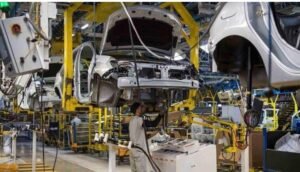
The launch of Nigeria’s first Manufacturing Technology University Innovation Pod (Manu-Tech UniPod) at the Michael Okpara University of Agriculture, Umudike (MOUAU), is more than another public project. It is a strategic investment that connects higher education, manufacturing, technology, entrepreneurship and industrial development in one ecosystem. If implemented as planned, the initiative could help close one of Nigeria’s biggest economic gaps by turning university research into commercial products, supporting startups and creating skilled jobs.
For decades, Nigeria has produced thousands of graduates every year, yet many universities have struggled to convert research into businesses, patents and industrial solutions. The Manu-Tech UniPod seeks to change that model by making universities active partners in manufacturing instead of remaining institutions that mainly produce academic papers.
The choice of Abia State also carries economic importance. The state already has a long history of entrepreneurship, manufacturing and small-scale industrial production, particularly around Aba. Placing the country’s first manufacturing innovation hub in Abia builds on an existing culture of enterprise rather than attempting to create one from scratch.
Why the Manu-Tech UniPod Matters
During the inauguration, Vice President Kashim Shettima, represented by the Minister of Education, Dr. Olatunji Alausa, described the project as “a strategic investment in Nigeria’s future.”
He added that the initiative “positions our universities as agents of industrial transformation, innovation, enterprise creation, and sustainable economic development.”
Those remarks point to an important policy change. Modern economies depend less on raw materials and more on knowledge, innovation and technology. Countries that lead in manufacturing rarely depend only on factories. They build research centres where engineers, entrepreneurs and investors develop products before they reach the market.
That model has powered industrial growth in countries such as Germany, South Korea, China and the United States. Nigeria has often lacked that connection between universities and industry. The Manu-Tech UniPod attempts to establish that missing bridge.
Why Abia Was the Right Choice
Governor Alex Otti said the project demonstrates the confidence that the Federal Government and the United Nations Development Programme (UNDP) have in Abia’s economic future.
That confidence is not without reason.
Abia is home to Aba, one of West Africa’s largest commercial and manufacturing clusters. Thousands of local businesses manufacture footwear, garments, leather products, machinery parts and household goods. Many of these enterprises operate with limited access to advanced technology, research facilities and product development laboratories.
The new innovation hub creates an opportunity to solve that problem.
Researchers at MOUAU can now work alongside manufacturers, students and technology startups to improve product quality, develop new production methods and reduce manufacturing costs. Instead of importing many industrial solutions, businesses could increasingly develop them locally.
Moving Beyond Research Papers
One of Nigeria’s long-standing challenges has been the weak commercialisation of university research.
Many academic discoveries never reach the marketplace because researchers often lack funding, industrial partners, intellectual property support or business incubation.
The Manu-Tech UniPod is designed to tackle those barriers simultaneously.
According to the Federal Ministry of Information, the facility will provide advanced manufacturing technologies, prototyping equipment, business incubation support and industry mentorship. These resources will enable researchers and entrepreneurs to transform innovative ideas into market-ready products.
This approach can increase patent registrations, startup creation and technology transfer while making universities more relevant to economic development.
Technology Solutions That Could Transform Manufacturing
The innovation hub offers opportunities that extend well beyond traditional engineering.
Manufacturers in Abia and across southeastern Nigeria can gain access to digital design tools, rapid prototyping, smart manufacturing systems, robotics applications, precision engineering and advanced product testing.
Agricultural technology also stands to benefit because the facility is located within the Michael Okpara University of Agriculture.
Researchers can develop modern food processing equipment, improved storage systems, precision farming technologies and value-addition solutions that reduce post-harvest losses while increasing agricultural productivity.
Digital manufacturing technologies can also support the production of medical devices, renewable energy equipment, educational tools and locally designed industrial machinery.
Such innovations would reduce dependence on imported products while improving Nigeria’s domestic production capacity.
Building Jobs Instead of Job Seekers
Perhaps the greatest promise of the Manu-Tech UniPod lies in employment.
Young graduates often leave university searching for jobs that do not exist. Innovation hubs encourage a different outcome by helping graduates become entrepreneurs, product developers and technology founders.
UNDP Resident Representative Elsie Attafuah said the project supports the ambition of positioning Abia as Nigeria’s leading centre for innovation-driven industrial development.
She also disclosed that UNDP is mobilising US$1 billion to build Africa’s largest innovation ecosystem. The programme aims to support 10,000 startups, help 1,000 high-growth businesses expand, improve the livelihoods of more than 100 million people, and generate US$10 billion in economic value across Africa over the next decade.
Those figures illustrate that the UniPod is not operating in isolation. It forms part of a much larger continental innovation strategy.
A Boost for Southeast Nigeria
The economic gains are unlikely to stop at Abia’s borders.
Manufacturers from neighbouring Imo, Ebonyi, Enugu, Anambra and Rivers states can collaborate with the innovation hub on research, product testing and industrial development.
Regional supply chains may become stronger as more companies adopt locally developed manufacturing technologies.
The project could also attract investors seeking locations where universities, skilled graduates and industrial clusters already exist within the same ecosystem.
That combination often determines where modern manufacturing investments flow.
Success Will Depend on Execution
The excitement surrounding the Manu-Tech UniPod should also be balanced with realism.
Innovation centres succeed when funding remains stable, equipment is regularly upgraded, researchers collaborate with industry, and private investors actively participate.
Without those elements, even well-designed facilities can become underutilised.
Nigeria has previously launched ambitious projects that struggled because maintenance, governance and commercial partnerships weakened after inauguration.
The UniPod will therefore need measurable performance indicators, including startups created, patents registered, technologies commercialised, businesses supported and jobs generated.
Those outcomes will matter more than the opening ceremony.
The Bigger Economic Picture
Nigeria continues to pursue economic diversification beyond oil.
Manufacturing remains one of the sectors capable of creating millions of jobs while increasing exports and reducing imports.
The Federal Government has linked the UniPod initiative to President Bola Tinubu’s ambition of building a US$1 trillion economy by 2030, with universities expected to play a larger role in industrial development.
That target will require stronger collaboration among government, universities, manufacturers, investors and development partners.
The Manu-Tech UniPod offers a practical model for achieving that collaboration.
In conclusion, Abia’s Manufacturing Technology University Innovation Pod represents one of Nigeria’s most promising attempts to unite higher education with industrial growth. The project has the capacity to transform university research into commercial products, strengthen manufacturing, nurture technology startups and create highly skilled employment.
Its long-term value, however, will depend on consistent investment, effective management and strong partnerships with industry.
If those conditions are sustained, Abia may not simply host Nigeria’s first university manufacturing innovation hub. It could become the blueprint for a new generation of technology-driven industrial development across the country.