Nigeria’s digital payments industry has entered another phase of competition following the arrival of Google Pay, with FirstBank, Guaranty Trust Bank (GTBank) and United Bank for Africa (UBA) enabling the global payment service for eligible customers.
The development represents more than an additional payment option for Nigerian bank customers. It introduces a new layer of international payment technology into an economy where electronic transactions are becoming increasingly important to businesses, consumers and financial institutions.
Google officially launched Google Wallet, which includes Google Pay, in Nigeria on October 28, 2026. The service allows eligible Android and Wear OS users to store supported payment cards digitally and make contactless payments at compatible terminals. Customers can also use the service for supported online purchases and payments.
The participation of three major Nigerian banks gives the service an immediate distribution advantage. However, its long-term economic value will depend on merchant acceptance, consumer access, transaction security and the ability of Nigeria’s payment infrastructure to support widespread adoption.
Google Pay Introduces a New Dimension to Nigeria’s Digital Payments
The integration allows eligible customers of FirstBank, GTBank, and UBA to add supported debit, credit or prepaid cards to Google Wallet.
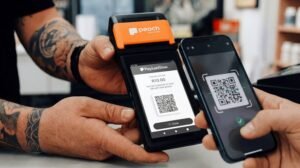
Customers can then pay at supported contactless terminals without presenting their physical bank cards. They can also complete eligible online transactions without repeatedly entering their card details.
The technology uses Near Field Communication (NFC) to facilitate contactless payments between compatible smartphones and payment terminals.
Google Pay also incorporates encryption and tokenisation. Tokenization replaces sensitive card information with a digital payment token. This means merchants do not receive the customer’s actual card number during supported transactions.
Google says its security architecture protects payment information through multiple security layers. Customers can also use Google’s Find My Device service to lock or erase information from lost or stolen devices.
For Nigeria, the introduction comes at a time when consumers increasingly depend on mobile devices for financial transactions.
FirstBank’s Group Head of e-Business and Retail Products, Abednego Ugwueke, said the integration supports the bank’s commitment to improving digital banking.
“At FirstBank, we are constantly evolving our digital capabilities to deliver banking experiences that are simple, secure and aligned with the lifestyle of our customers,” he said.
He added that the service would provide eligible customers with a globally accepted payment option.
UBA has also positioned the development as part of its wider digital banking strategy.
Its Directorate Head of Cards, Orry Seem, explained that mobile phones have become central to customers’ everyday activities.
“For many of them, the phone is the first thing they reach for, so it makes sense for it to become their wallet too,” she said.
These positions reveal an important commercial opportunity. Banks can improve customer experience while encouraging greater use of their existing card products.
Nigeria’s Growing Cashless Economy Creates an Opportunity
Google Pay’s arrival builds on an established expansion of electronic payments in Nigeria.
The Central Bank of Nigeria’s payment statistics show that the country’s electronic payment infrastructure has recorded substantial growth.
During the first half of 2024, NIBSS Instant Payment transactions reached approximately 5.63 billion, valued at ₦476.89 trillion.
Point-of-sale transactions also increased to approximately 6.40 billion, representing ₦85.91 trillion. Mobile payment transactions reached approximately 3.49 billion, valued at ₦159.42 trillion.
These figures demonstrate the scale of Nigeria’s growing digital payments market. They also provide commercial justification for international payment providers seeking entry into the country.
Furthermore, the Nigeria Inter-Bank Settlement System reported in February 2026 that transactions processed through its instant payment platform increased by 120 per cent between 2022 and 2024.
The platform processed nearly 11 billion transactions in 2024, compared with approximately five billion in 2022.
Google Pay enters an economy that already understands electronic payments. Its opportunity is to improve how consumers complete transactions rather than introduce digital banking from the beginning.
This distinction is important.
Nigeria already has bank transfers, USSD payments, mobile banking applications, QR payments and card-based transactions. Google Pay adds an internationally recognised digital wallet that connects Nigerian bank cards with compatible payment environments.
The resulting competition could encourage local financial institutions to improve transaction speed, security and customer experience.
GTCO’s Strategy Connects Customers with Businesses
Among the three participating banks, GTCO has adopted an interesting commercial approach by extending Google Pay beyond customer payments.
Through GTBank and HabariPay’s Squad payment gateway, the financial group has positioned itself on both sides of the transaction.
GTBank customers can use eligible debit cards stored in Google Wallet for online purchases, subscriptions, travel bookings, food delivery and bill payments.
Meanwhile, businesses using Squad can offer Google Pay as an additional checkout option.
GTCO Group Chief Executive, Segun Agbaje, identified abandoned online purchases as an important problem affecting digital commerce.
“Most failed online payments are not refused, they are abandoned. Somewhere along the way the customer gives up, and the business never learns about the sale it lost,” he said.
Agbaje explained that the group wanted customers and businesses to access the service from its introduction.
“With Google Pay, what matters to us is that we are ready on both sides from the first day: a GTBank customer can pay with it, and a business on Squad can accept it.”
HabariPay Managing Director, Eduofon Japhet, said the integration would simplify merchant checkout.
“Squad businesses now get Google Pay inside the checkout they already use, so their customers can pay in a few taps with a card they have already saved,” she said.
This approach has wider economic implications.
For Nigerian small businesses, complicated payment procedures can discourage customers from completing online purchases. Reducing checkout requirements could improve conversion rates and increase sales.
It could also benefit Nigerian businesses selling products and services to international customers, including members of the diaspora.
The opportunity extends to travel companies, hospitality businesses, online retailers and digital service providers.
Digital Wallets could Strengthen Nigeria’s Digital Commerce
One of the most important economic benefits of Google Pay is its potential contribution to digital commerce.
Nigeria has a large population of young consumers, entrepreneurs and technology users. However, digital businesses still encounter difficulties associated with payment failures, customer confidence and international transactions.
A reliable digital wallet can reduce some of these barriers.
Customers can complete supported transactions without repeatedly entering card information. Businesses can provide additional payment options without developing independent payment technologies.
This creates opportunities for e-commerce, subscription services, online education, entertainment and digital exports.
For technology startups, easier payment experiences could improve customer retention and reduce the administrative challenges associated with collecting payments.
There is also an opportunity for Nigerian businesses to improve their competitiveness within Africa’s expanding digital economy.
However, Google Pay will not automatically resolve foreign exchange restrictions, cross-border settlement challenges or high transaction costs. Those issues require broader improvements involving banks, regulators and payment infrastructure providers.
Financial Inclusion Remains the Bigger Challenge
Despite the opportunities, Google Pay’s introduction also exposes important limitations within Nigeria’s financial system.
The World Bank’s Global Findex 2025 database provides useful evidence of the country’s financial inclusion challenges.
Its Nigeria financial inclusion data show that approximately 63.26 percent of adults aged 15 and above had an account in 2024. This leaves millions of Nigerians outside formal financial services.
Google Pay primarily serves consumers who already possess eligible bank cards, compatible smartphones and reliable access to digital services.
Customers using basic phones cannot access its contactless smartphone functionality. Those without NFC-enabled devices also cannot use the tap-to-pay feature.
Google confirms that contactless payments require an Android device with NFC capability. Card eligibility also depends on participating banks.
Consequently, the service could initially benefit urban professionals, established businesses and digitally connected consumers more than low-income households and rural communities.
Nigeria must therefore pursue digital payment innovation alongside affordable internet access, smartphone accessibility, financial literacy and wider banking inclusion.
Security and Infrastructure will Determine Adoption
Consumer confidence will remain central to Google Pay’s success.
Although tokenisation reduces exposure of actual card details, digital wallets cannot eliminate every form of financial fraud.
Phishing, compromised devices, account takeover attempts and social engineering remain potential threats.
Banks and payment providers must strengthen fraud monitoring, customer education and transaction authentication.
Merchant infrastructure also requires attention.
Businesses need compatible contactless terminals to accept in-store payments. Reliable electricity and internet connectivity are equally important for consistent digital payment services.
Regulatory oversight by the Central Bank of Nigeria will also remain essential, particularly regarding consumer protection, transaction disputes and payment security.
What Google Pay means for Africa’s Digital Economy
Nigeria’s adoption could provide a foundation for wider digital payment partnerships across Africa.
UBA operates in 20 African countries and serves more than 45 million customers globally, giving it an established regional banking network.
This creates opportunities to extend modern payment experiences across markets as regulatory approval and technical partnerships permit.
For African businesses, international digital wallets could support cross-border commerce, tourism, online services and diaspora transactions.
They could also encourage greater competition between traditional banks, fintech companies and global technology providers.
However, Africa’s fragmented payment regulations, differences in currency systems and uneven digital infrastructure remain obstacles.
The African Continental Free Trade Area could benefit from more efficient digital payments, particularly as businesses increasingly trade across national borders.
Conclusion: Nigeria’s Digital Payment Market enters a New Phase
The entry of Google Pay through FirstBank, GTBank and UBA represents an important development in Nigeria’s digital banking industry.
It gives eligible customers additional payment flexibility, offers merchants another checkout option and introduces stronger competition in the country’s financial technology market.
GTCO’s integration through Squad is particularly notable because it connects consumers with businesses within the same payment ecosystem.
Nevertheless, the real measure of success will not be the number of banks announcing partnerships. It will be the number of customers using the service, businesses accepting payments and transactions completed securely.
For Nigeria and Africa, the opportunity extends beyond replacing physical bank cards with smartphones. It lies in building an inclusive digital economy where payment technology supports business growth, international commerce and greater financial participation.
Google Pay has opened another door. The responsibility now rests with banks, regulators, technology companies and merchants to ensure that more Nigerians can walk through it.