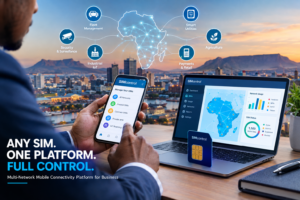
ESDIAC Global Systems Limited has secured regulatory approval to expand its international connectivity services in Nigeria. The opportunity extends beyond selling data. Its commercial success will depend on affordability, reliable access and the ability to convert cross-border connectivity into measurable economic benefits.
Nigeria’s Data Market attracts Another Competitor
Nigeria’s telecommunications market is entering another phase of competition as technology companies seek opportunities beyond conventional mobile calls and internet subscriptions.
ESDIAC Global Systems Limited, a Nigerian technology company founded by Austin Ugbebor, has secured a licence to provide international data access services. The Nigerian Communications Commission (NCC) lists ESDIAC among its individual category licensees, with a licence running from August 1, 2026, to July 31, 2036.
The approval provides a regulatory basis for the company to expand its operations in Nigeria. Its planned services include cross-border data solutions, international connectivity, data top-ups and global electronic SIM cards, commonly known as eSIMs.
The company says it operates in at least 150 countries and 400 cities. Its international reach could help it serve Nigerian businesses, travellers, diaspora communities and consumers who need connectivity across national borders.
In a statement reported by the News Agency of Nigeria, Ugbebor said the company intended to make international communication more affordable and accessible to Nigerians at home and abroad. He also pledged to invest in local infrastructure, develop talent and extend services to underserved communities.
These commitments establish commercial ambition. However, the economic value of the licence will depend on whether ESDIAC can offer competitive prices, dependable services and practical advantages over existing alternatives.
Why Global eSIM Technology Matters
The eSIM market offers one route through which ESDIAC could distinguish its services.
An eSIM is a digital SIM embedded in a compatible device. Unlike a conventional removable SIM card, it allows users to download and activate supported mobile network profiles electronically.
For international travellers, this can reduce the need to purchase a physical SIM card after arriving in another country. Depending on device compatibility and the provider’s arrangements, users can purchase a data package before departure and activate connectivity when required.
The technology also creates opportunities for Nigerian businesses with international operations. Importers, exporters, consultants and remote workers can use cross-border connectivity services to maintain communication while travelling or coordinating activities across different markets.
However, an eSIM does not automatically eliminate roaming charges or guarantee coverage everywhere. Prices, network availability, activation requirements and data limits depend on the provider’s agreements with participating mobile operators.
ESDIAC will therefore need transparent pricing and reliable international network partnerships to persuade consumers to choose its services.
Its international calling and data top-up offerings could also provide a convenient alternative for customers who manage communication across several countries.
Affordability Remains Nigeria’s Central Challenge
Nigeria’s large population and expanding digital economy create a substantial potential market for connectivity services. Yet access remains uneven.
The World Bank’s development indicators, drawing on International Telecommunication Union data, put the proportion of Nigerians using the internet at 41 percent in 2024. This indicates that a large share of the population remained outside internet use during the reporting year.
The challenge is not simply whether network infrastructure exists. Households and businesses must also be able to afford internet-enabled devices, data subscriptions and the electricity required to use them.
The ITU’s research on ICT affordability identifies service and device costs as important barriers to meaningful connectivity, particularly for lower-income households. Its 2025 connectivity analysis also shows that the relationship between affordability and internet adoption remains important across economies.
ESDIAC could contribute to the solution by introducing flexible international data packages, competitive top-up prices and products tailored to customers who need connectivity intermittently.
However, the company has not disclosed sufficient pricing information to establish whether its proposed services will be cheaper than existing alternatives.
Its impact should therefore be assessed against actual consumer costs, service reliability and the value customers receive for each unit of data purchased.
Competition Could Improve Services and Business Productivity
The commercial case for ESDIAC extends beyond individual consumers.
Small businesses increasingly depend on digital communication to manage suppliers, receive customer enquiries, coordinate deliveries and conduct transactions. Companies involved in international trade also need dependable communication with partners, shipping agents and customers abroad.
A provider that simplifies access to international connectivity could reduce some of the operational difficulties associated with managing communication across multiple markets.
For Nigerian exporters and technology companies, reliable connectivity can support customer service, remote collaboration and access to international clients. For travel businesses, it could improve the availability of communication packages for customers moving between countries.
Competition can also encourage providers to improve customer support, introduce more flexible products and develop better distribution channels.
Nevertheless, a new licence does not automatically produce lower prices or better services. The outcome will depend on the strength of competition, the company’s operating costs and its ability to deliver consistent service.
The NCC’s licensing and market-monitoring responsibilities remain important in maintaining an orderly telecommunications market. Its published industry data provide a basis for tracking operators and examining activity across different segments of the sector.
Africa’s Digital Economy offers a Larger Opportunity
ESDIAC’s international operations could also position the company to participate in Africa’s broader digital expansion.
The GSMA’s Mobile Economy Africa 2026 report estimates that mobile technologies and services contributed $240bn to Africa’s economy in 2025, equivalent to 7.8 percent of the continent’s gross domestic product. It projects that contribution will rise to $290bn by 2030.
These figures demonstrate the economic importance of mobile connectivity, although they do not represent revenue available to any single provider.
The opportunity lies in helping businesses and individuals use digital services more productively. Cross-border data products can support international trade, remote employment, tourism and communication between African markets.
For example, a Nigerian business expanding into Ghana or Kenya may need connectivity arrangements that allow employees to communicate while travelling. A digital services company serving customers in multiple countries may also benefit from easier access to international mobile data.
ESDIAC could develop products for these users by establishing commercial partnerships with network operators, travel companies, payment providers and business service platforms.
However, expanding across Africa requires more than a Nigerian licence. The company must comply with applicable regulations in each market, negotiate network access and address differences in payment systems, consumer protection requirements and telecommunications infrastructure.
Its existing international footprint could offer a starting point, but its competitive advantage will depend on the quality and cost of its local partnerships.
Investment must Translate into Local Economic Value
Ugbebor has pledged to use the licence to expand operations, invest in local infrastructure and develop talent.
If implemented, these commitments could generate benefits through technical employment, customer support, software development, distribution and commercial partnerships.
Local investment could also help build Nigerian expertise in digital communications and international connectivity management.
Yet the scale of these benefits remains uncertain because the company has not publicly established a detailed investment programme, job creation target or infrastructure spending commitment in the available announcement.
A credible expansion strategy should therefore include measurable targets for local employment, staff training, service availability and investment.
ESDIAC should also publish clear information about its products, coverage, pricing and customer protection arrangements. Such disclosures would help consumers and business customers evaluate its offerings against competing services.
The government, meanwhile, can support the sector through predictable regulation, effective competition and policies that encourage infrastructure investment.
The Real Measure of Success
ESDIAC’s new licence creates an opportunity to compete in Nigeria’s international data and connectivity market. Its global eSIM services and cross-border data products could address practical needs among travellers, diaspora communities and businesses operating internationally.
The wider opportunity is economic. Better connectivity can help Nigerian businesses reach customers, coordinate supply chains and participate in digital commerce across Africa and beyond.
But Nigeria’s digital economy needs more than additional service providers. It needs affordable products, dependable networks, accessible devices and the skills required to use digital technology effectively.
The GSMA’s findings underline this distinction: mobile internet availability does not guarantee adoption, particularly when affordability and digital skills remain obstacles.
For ESDIAC, the next phase must turn regulatory approval into competitive services and tangible local investment. For Nigeria, the broader objective should be to ensure that greater competition expands meaningful access rather than merely increasing the number of companies in the market.
The licence is an important commercial starting point. Its lasting value will depend on whether Nigerian consumers and businesses gain more affordable, reliable and useful connectivity.