South Africa’s assumption of the chairmanship of the 16-member Southern African Development Community (SADC) gives its regional influence a practical test: can the continent’s most industrialised economy convert commercial weight into deeper regional integration?
The numbers explain why Pretoria matters. South Africa exported $28.3bn of goods to SADC markets in 2024 and imported $6.8bn, producing $35.1bn in two-way trade. SADC absorbed 91% of the country’s intra-African exports, according to Trade Law Centre data. The flows include machinery, fuels, vehicles, metals, food and manufactured goods. It gives South African companies a large market and neighbours access to an industrial supplier.
The Leadership Opportunity
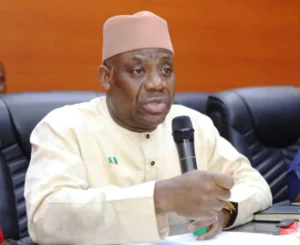
President Cyril Ramaphosa chairs SADC after South Africa served as interim chair during political disruption in Madagascar. At the 46th SADC Summit in Durban, leaders adopted a programme centred on infrastructure, agriculture and critical minerals. SADC says the agenda is intended to build a region that is industrially competitive and resilient.
Its ports, manufacturers, logistics networks and capital markets give it capabilities that many SADC economies lack. But leadership will be judged less by speeches than by whether goods cross borders faster, factories source more inputs regionally and investors build supply chains across several countries.
The Trade Gap is the Warning
SADC’s intra-regional trade remains close to 20% of total trade, below the bloc’s aspirations. SADC data show intra-regional trade rose from 18.4% of total trade in 2023 to 19.8% in 2024, but remained below pre-pandemic levels.
Regional growth rose to 3.4% in 2025 and is projected at 3.9% in 2026. Zimbabwe was the only SADC member to achieve the bloc’s 7% growth target in 2025, while no member is currently expected to reach that threshold in 2026.
Manufacturing is an even harder problem. SADC says manufacturing’s share of regional GDP remains around 12%, against a 30% target for 2030. Manufacturing’s contribution to SADC’s regional GDP declined from 11.3% in 2024 to 10.9% in 2025, leaving the bloc well below its 30% manufacturing target for 2030. Southern Africa has minerals, agricultural resources and consumer markets, yet too much value remains outside the region.
South Africa remains the largest contributor to intra-SADC trade. South Africa accounted for 55% of the region’s exports and 17% of its imports in 2023, according to South Africa’s Department of Trade, Industry and Competition. South Africa’s year-long chairmanship will focus on industrialisation, infrastructure, agriculture and critical minerals, with the broader objective of developing regional value chains and increasing local processing.
If neighbouring economies remain mainly suppliers of raw materials and buyers of finished South African products, regional integration may deepen trade without creating balanced industrial development. That can generate political resistance and weaken the case for open markets.
Industrial Policy must Become Regional
South Africa’s strongest contribution would be to build regional value chains rather than simply expand exports. Critical minerals are an obvious starting point. Lithium, copper, cobalt, manganese and other minerals should feed processing, component manufacturing and higher-value industries within Southern Africa.
Agriculture offers another route. Regional cold chains, food-processing plants, packaging facilities and common standards could reduce dependence on imported finished food while creating demand for farmers and manufacturers.
SADC’s 2026 Industrialisation Week identifies agro-processing, pharmaceuticals, consumer goods and critical-minerals beneficiation as priority value chains. The bloc also plans stronger energy, transport, logistics, water and ICT infrastructure. South African firms can provide capital and technology if smaller economies see credible local benefits.
The Technology Fix
Digital customs platforms, electronic documentation, interoperable cargo systems and one-stop border facilities could reduce delays and transaction costs across major Southern African trade corridors. The African Development Bank’s SADC Trade and Transit Facilitation Project specifically aims to improve the movement of goods and people along the North-South Corridor and at key border posts.
The African Development Bank is supporting SADC trade and transport facilitation, including customs interconnectivity and digitalisation along corridors such as Beitbridge, Kazungula, Chirundu and Kasumbalesa. The World Bank says satellite data and artificial intelligence can help governments identify congestion before it becomes a crisis.
South Africa should use its chairmanship to promote regional digital trade infrastructure with common data standards, interoperable payment systems and real-time cargo tracking. Small businesses should verify tariffs, submit documents, obtain permits and receive payments through integrated platforms.
The World Bank says only 3% of Africa’s digital-goods imports come from within Africa. It also finds that African countries generally impose higher tariffs on digital goods than other regions. A more open digital market would lower technology costs and help African firms connect to continental value chains.
The Political Constraint
South Africa’s regional leadership carries a domestic contradiction. Migration disputes and attacks on foreign nationals have strained relations with neighbours whose citizens form part of South Africa’s labour market and consumer economy.
That makes the politics of integration as important as economics. A country asking neighbours to open markets must demonstrate that regional mobility and commercial exchange can coexist with credible border management and social stability.
South Africa’s Real Test
South Africa does not need SADC to prove that it is the region’s economic heavyweight. The $35.1bn trade relationship already demonstrates that. The harder task is to use that weight without making integration unequal.
The measure of Ramaphosa’s chairmanship will be practical: fewer border delays, lower logistics costs, more regional manufacturing, better digital trade systems and investment beyond extraction.
SADC already has the policy architecture. What it lacks is execution at scale. South Africa has the industrial base, corporate capacity and regional commercial interests to help deliver it. If Pretoria aligns those assets with the interests of its 15 partners, its chairmanship could make SADC more than a political forum. It could become a more efficient production network and a stronger foundation for Africa’s single market.