Angola is preparing for one of the most important corporate transactions in its recent economic history. The planned initial public offering (IPO) of 15 percent of Unitel, the country’s largest telecommunications company, is more than another stock market listing. It is a test of the government’s commitment to economic reform, corporate governance, and private sector participation after years of state intervention and political controversy.
The decision also closes a remarkable chapter in the history of Unitel. The company once stood at the centre of the business empire of Isabel dos Santos, who was previously ranked as Africa’s richest woman before legal disputes and corruption investigations led the Angolan government to seize her stake in 2022. Today, Unitel is entirely state-owned and is returning to the market through a public offering that could reshape Angola’s telecommunications industry and strengthen confidence in its financial markets.
The success or failure of this IPO will influence investor perceptions far beyond Angola. It will also provide valuable lessons for African countries seeking to privatise strategic assets without weakening national interests.
A defining moment for Angola’s capital market
The IPO will place 7.5 million shares on the Angola Debt and Securities Exchange, with one million shares reserved for Unitel employees. Trading is expected to begin after the subscription period closes, making it one of the largest listings since BODIVA began hosting public offerings in 2022.
The listing forms part of Angola’s PROPRIV programme, which seeks to reduce government ownership of major enterprises while attracting domestic and foreign investment.
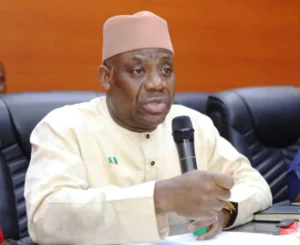
According to Angola’s Secretary of State for Finance and Treasury, Ottoniel dos Santos, the government’s objective is to build an economy led by private enterprise. He said the privatisation programme demonstrates the Executive’s vision of making “the private sector, in fact, the champion of the Angolan economy.”
That statement captures the broader purpose of the Unitel IPO. The government is not simply selling shares. It is attempting to create a stronger investment culture and expand Angola’s relatively small capital market.
From political controversy to corporate renewal
Unitel’s history explains why this transaction carries unusual political and economic importance.
For years, the operator generated enormous profits while serving as one of Angola’s most valuable corporate assets. Isabel dos Santos owned a 25 percent stake through Vidatel until President João Lourenço launched a broad anti-corruption campaign after taking office.
The Angolan government nationalised her interest in Unitel in 2022. Since then, the company has operated under state ownership while preparing for partial privatisation. Meanwhile, dos Santos continues to contest several legal proceedings in European courts and insists the cases against her are politically motivated. A London High Court also upheld an asset freeze of about £580 million linked to a dispute involving Unitel.
The IPO therefore marks both a commercial transaction and a political milestone. It demonstrates how Angola intends to convert previously disputed strategic assets into publicly traded companies that operate under greater transparency and market discipline.
Why Unitel remains Angola’s digital powerhouse
Despite the ownership disputes, Unitel has maintained its dominant market position.
The operator serves more than 21 million subscribers, making it Angola’s largest telecommunications company. It also owns a controlling interest in Banco de Fomento Angola (BFA), giving it strategic influence across both telecommunications and financial services.
Its scale offers investors exposure to multiple high-growth segments.
Mobile broadband demand continues to rise across Angola as smartphone adoption increases.
Enterprise connectivity is expanding as businesses digitise their operations.
Mobile financial services continue to gain users as digital payments replace cash transactions.
Cloud services, cybersecurity solutions and data centres are becoming increasingly important for government agencies and private businesses.
These business segments position Unitel to benefit from Africa’s expanding digital economy over the next decade.
Technology opportunities for Angola and Africa
A successful Unitel IPO could unlock fresh investment for network expansion and digital infrastructure.
Additional capital would support wider 4G and 5G deployment, stronger fibre connectivity and improved broadband access in underserved communities.
Better infrastructure could deliver several long-term benefits.
Small businesses would gain more reliable internet access for digital commerce.
Banks could accelerate mobile banking and digital payment services.
Schools would gain stronger platforms for online education.
Hospitals could improve telemedicine and remote healthcare delivery.
Government agencies could expand digital public services.
These developments would strengthen Angola’s participation in the African digital economy while supporting the goals of the African Continental Free Trade Area, which depends heavily on modern digital infrastructure for cross-border trade.
A stronger signal for African investors
African stock exchanges have struggled to attract large private listings compared with developed markets.
If Unitel’s offering attracts healthy demand, it will strengthen BODIVA’s reputation and encourage other large Angolan companies to consider public listings instead of relying entirely on bank financing.
It could also increase participation by retail investors, pension funds and institutional investors seeking long-term exposure to Angola’s digital economy.
Employee participation deserves particular attention. Reserving one million shares for workers allows employees to benefit directly from the company’s future performance while promoting stronger corporate accountability.
Risks investors cannot ignore
The IPO also carries genuine risks.
Angola’s economy remains heavily dependent on oil revenues, making overall market conditions vulnerable to fluctuations in global crude prices.
Currency volatility remains another concern for international investors.
Competition within Angola’s telecommunications sector continues to increase, particularly as operators invest more aggressively in broadband and digital services. Higher competition may reduce future profit margins even as customer numbers grow.
Corporate governance will also remain under close scrutiny. Investors will expect stronger financial disclosure, independent oversight and consistent regulatory practices after the company’s controversial ownership history.
These factors mean investor confidence will depend not only on Unitel’s financial performance but also on Angola’s broader commitment to regulatory stability.
What the Unitel IPO means for Africa
The Unitel flotation carries implications beyond Angola.
Many African governments still own large stakes in telecommunications operators, energy companies and transport businesses. Several countries are searching for ways to attract private capital without losing strategic control.
If Angola demonstrates that politically sensitive state assets can become transparent, publicly listed companies operating under modern governance standards, the Unitel model could influence privatisation strategies elsewhere on the continent.
The listing would also reinforce a broader message that Africa’s digital economy deserves greater attention from international investors seeking long-term growth opportunities.
In conclusion, the Unitel IPO represents far more than a sale of government shares. It is a measure of Angola’s economic reforms, the maturity of its capital markets and the future direction of one of Africa’s most important telecommunications companies.
For investors, the offering provides exposure to a market leader serving more than 21 million customers in an economy with growing digital demand.
For Angola, success would strengthen confidence in its reform programme, deepen its financial markets and create new funding opportunities for digital infrastructure.
For Africa, the transaction offers another example of how telecommunications companies can become engines of capital market development, financial inclusion and digital transformation when supported by transparent governance and sustained investment.