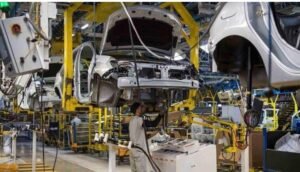
China’s high-end electric vehicle industry is entering a decisive stage in global expansion. VOYAH, a premium new energy vehicle brand under Dongfeng Motor Corporation, has set out an ambitious international plan that goes beyond exports. Its latest direction combines technology deployment, infrastructure investment, and market localisation. This strategy has clear implications for emerging markets, especially across Africa.
At the 19th Beijing International Automotive Exhibition, the company presented a structured global roadmap. It stated that it would focus on “deepening presence in Europe, expanding into the Middle East, and entering right-hand drive markets.” This approach targets regions with different regulatory systems and driving formats. Africa falls directly into the right-hand drive category in key economies such as Nigeria, Kenya, and South Africa.
The company’s expansion comes at a time when global electric vehicle adoption is accelerating. According to the International Energy Agency, global EV sales exceeded 14 million units in 2023 and continue to grow steadily, driven by falling battery costs and policy incentives. VOYAH’s entry into more than 40 countries positions it within this rising demand curve.
The company’s strategy is not limited to selling vehicles. It is building a full ecosystem. It announced a plan to ensure that pure electric vehicles account for over 50 percent of its sales by 2027. At the same time, it plans to deploy a fast-charging network to support adoption. This combination addresses two major barriers in emerging markets: affordability and charging access.
Battery cost remains central to EV adoption. Data from BloombergNEF shows that lithium-ion battery prices have dropped by more than 80 percent over the past decade. This trend supports VOYAH’s ability to scale production and compete on price over time. However, infrastructure remains uneven in Africa.
In many African countries, charging networks are limited. The African Development Bank notes that inadequate power infrastructure is a major constraint on EV adoption. VOYAH’s plan to build charging networks could therefore act as a catalyst. If executed well, it may reduce dependence on fragmented third-party infrastructure.
The unveiling of the VOYAH Taishan X8 also reveals the company’s product positioning. It targets the high-end segment with advanced connectivity and intelligent driving features. This aligns with broader industry trends led by firms such as Tesla and BYD, which combine software integration with hardware performance.
VOYAH stated that the Taishan X8 “garnered significant attention” at the exhibition. While the company did not release full technical specifications in the statement, its focus on intelligent systems suggests integration of driver assistance, over-the-air updates, and data-driven performance optimization. These features are becoming standard in premium EV segments globally.
For African markets, this raises both opportunity and risk. On one hand, the arrival of high-end EVs introduces new technology standards. It can accelerate the transfer of advanced manufacturing and digital automotive systems into local markets. On the other hand, affordability remains a major constraint.
According to the World Bank, vehicle ownership rates in Sub-Saharan Africa remain among the lowest globally due to income constraints. High-end EVs may initially serve a narrow customer base. However, they often pave the way for broader adoption as costs decline.
VOYAH’s listing on the Hong Kong Stock Exchange provides further insight into its strategy. Access to international capital markets strengthens its ability to fund expansion and infrastructure. It also places the company under global investor scrutiny, which can drive efficiency and governance standards.
The company described itself as the “first listed high-end new energy vehicle brand among central and state-owned enterprises.” This status matters. It combines state backing with market discipline. Such a structure can support long-term investment in infrastructure-heavy sectors like electric mobility.
The ESG initiative, branded “BetterVOYAH,” adds another layer to its global approach. Environmental, social, and governance frameworks are increasingly important for international operations. Investors and regulators in Europe and other regions demand compliance with sustainability standards. Africa is also moving in this direction, particularly in energy and transport policy.
Electric mobility has direct environmental benefits. The United Nations Environment Programme reports that transport accounts for a significant share of global emissions. Transitioning to electric vehicles can reduce urban air pollution and carbon output, especially in large African cities.
However, the impact depends on energy sources. Many African countries rely on fossil fuels for electricity generation. Without parallel investment in renewable energy, the environmental benefits of EVs may be limited. This creates an opportunity for integrated solutions that combine electric vehicles with clean energy systems.
VOYAH’s emphasis on integrating into “local industrial ecosystems” suggests awareness of this challenge. Local partnerships in energy, infrastructure, and distribution will be critical. In Africa, this could involve collaboration with utilities, governments, and private investors.
The company’s presence in the Middle East also provides a useful bridge into Africa. Trade and investment links between the two regions are growing. Expansion through the Middle East can support logistics, financing, and market entry into African economies.
Competition will intensify. Chinese EV makers are expanding rapidly across emerging markets. BYD has already entered several African countries. European and American manufacturers are also exploring opportunities. This competitive environment may benefit consumers through better pricing and innovation.
For African governments, the entry of firms like VOYAH presents policy choices. Incentives for EV adoption, import regulations, and infrastructure planning will shape outcomes. Countries that act early may attract investment and develop local value chains.
The broader implication is clear. Electric mobility is moving from a developed-market phenomenon to a global industry. Companies are no longer testing markets. They are building long-term positions. VOYAH’s strategy fits this pattern.
Its combination of product development, infrastructure investment, and global capital access creates a strong foundation. Yet success in Africa will depend on execution. Pricing, partnerships, and power supply will determine adoption rates.
The company’s message is direct. It aims to expand quickly, build ecosystems, and compete at the high end of the market. If it delivers on these goals, it could play a role in shaping the next phase of mobility in Africa.
For the continent, the stakes are high. Electric vehicles offer a path to cleaner transport and industrial development. They also require coordinated investment across sectors. VOYAH’s expansion adds momentum to this transition.
About VOYAH GLOBAL
VOYA Global is a travel consultancy and representation firm that supports hotels, resorts, and tourism brands to expand into international markets. The company delivers market representation, sales development, product structuring, and strategic marketing services. It connects clients with tour operators and travel agencies to secure distribution and increase revenue. Founded by industry expert Gary Orr, VOYA Global draws on extensive experience and strong global networks to achieve results. The firm operates across key regions, including Europe, and tailors its approach to each client’s goals. Its work strengthens brand visibility, builds partnerships, and improves commercial performance in a competitive global travel industry.